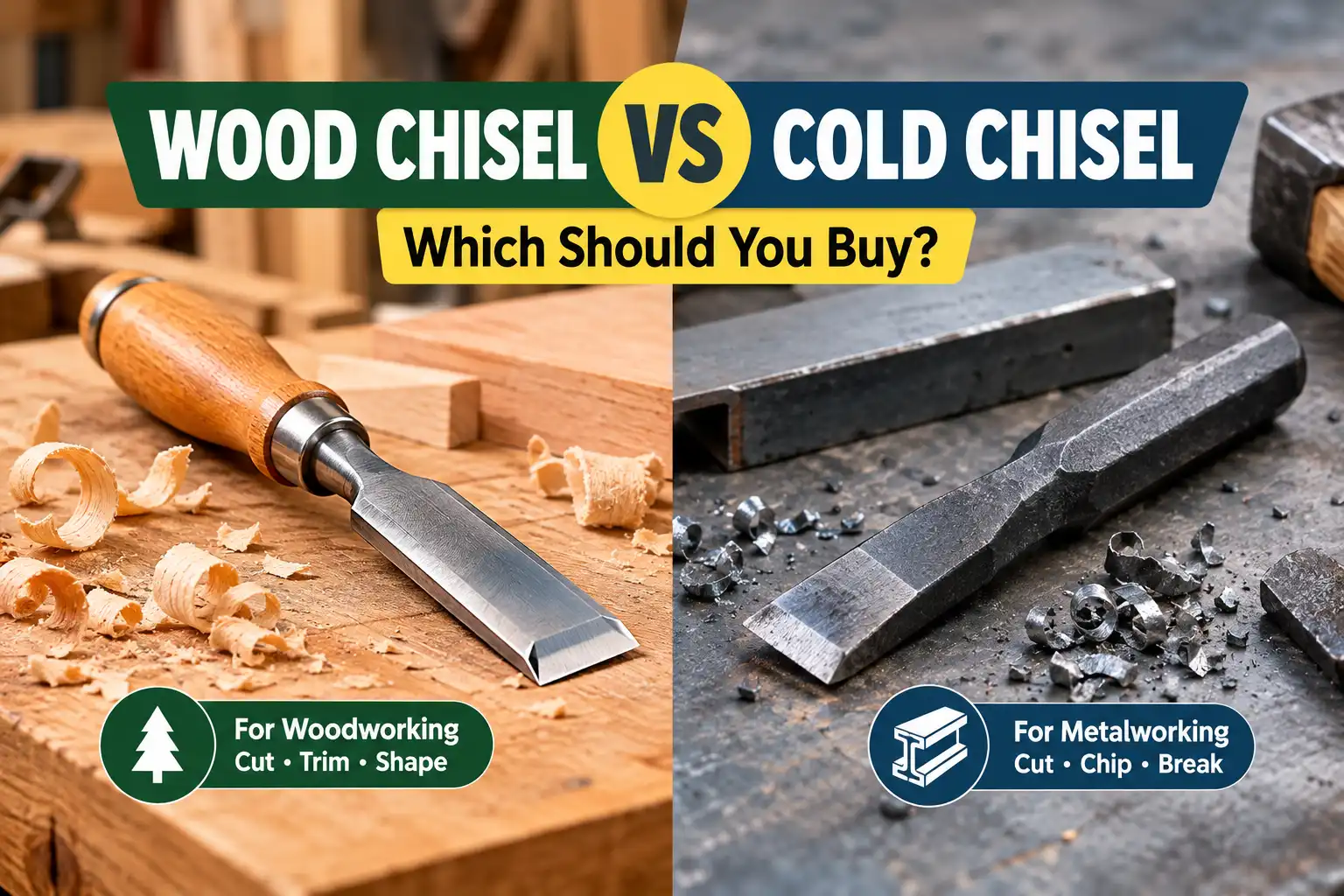
Choosing the right chisel matters because wood chisels and cold chisels are designed for very different jobs.
A wood chisel is made for cutting, trimming, and shaping wood. A cold chisel is designed for cutting and shaping metal and other hard materials. Although both tools have a blade-like cutting edge, using the wrong chisel can damage the tool, the workpiece, or even cause an injury.
If you are trying to understand the difference between a wood chisel and a cold chisel, this guide explains the key differences in design, material, edge shape, striking ability, and common uses.
For a broader introduction to chisel types, sizes, and applications, see our guide to wood chisels, their types, uses, and how to choose the right one.
Table of Contents
Quick Comparison: Wood Chisel vs Cold Chisel
| Feature | Wood Chisel | Cold Chisel |
| Main purpose | Cutting and shaping wood | Cutting and shaping metal |
| Typical material | Wood | Steel, iron and other metals |
| Cutting edge | Thin and relatively sharp | Thick and durable |
| Blade design | Optimized for controlled wood cuts | Built for impact and hard materials |
| Striking | Some models support hammer strikes | Designed for striking |
| Typical users | Woodworkers, carpenters, DIYers | Metalworkers, mechanics, fabricators |
| Main strength | Precision and clean cuts | Strength and impact resistance |
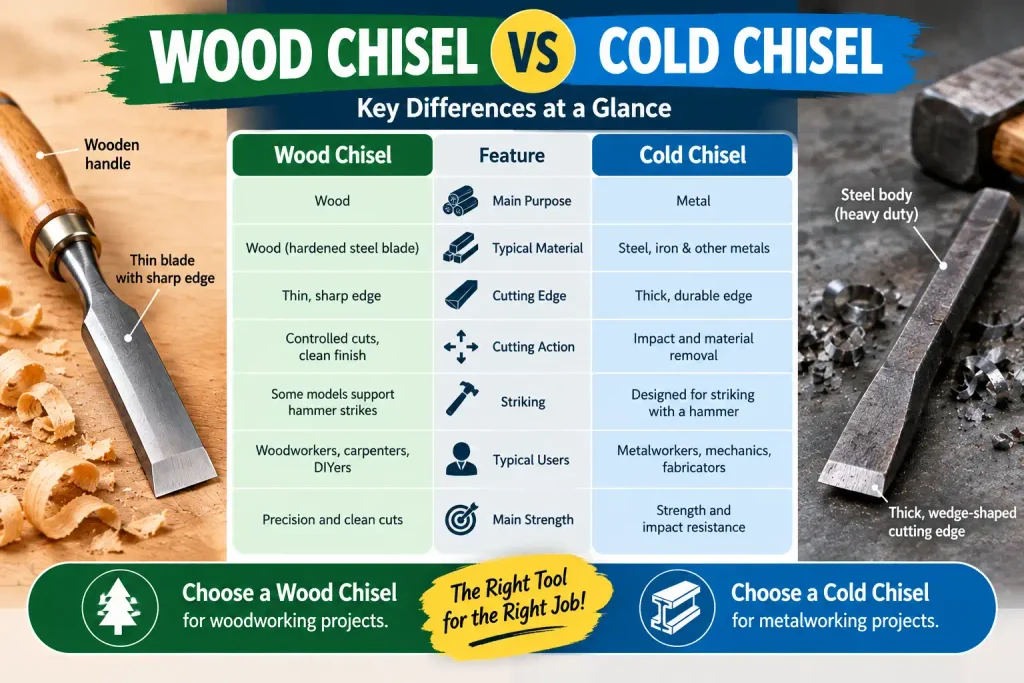
Simple rule: Use a wood chisel for wood and a cold chisel for metal.
What Is a Wood Chisel?
A wood chisel is a woodworking hand tool used to remove, trim, pare, and shape wood.
Most wood chisels have a hardened steel blade with a sharpened cutting edge. Different designs are available for specific woodworking tasks, including general bench work, paring, mortising, and carving.
A wood chisel can be used for tasks such as:
- Cutting wood fibers
- Cleaning joints
- Trimming tenons
- Chopping mortises
- Fitting dovetail joints
- Removing small amounts of wood
- Cleaning corners and recesses
- Carving and detail work
The edge is designed to be relatively sharp so the tool can make controlled cuts in wood.
If you are new to woodworking, our guide to the best wood chisels for beginners can help you choose the right size, blade steel, handle, and chisel set.
What Is a Cold Chisel?
A cold chisel is a metalworking hand tool designed for cutting, shaping, and removing metal without heating the workpiece.
Cold chisels usually have a strong steel body with a hardened cutting edge. They are commonly struck with a hammer to cut or break metal.
Common cold chisel uses include:
- Cutting sheet metal
- Removing rivets
- Cutting bolts and fasteners
- Chipping metal
- Separating metal parts
- Removing rusted or damaged components
- General metalworking and repair work
Unlike a fine woodworking chisel, a cold chisel prioritizes strength and impact resistance.
The exact design varies by manufacturer and application, so always follow the tool maker’s instructions for the chisel and hammer you are using.
Wood Chisel vs Cold Chisel: 7 Key Differences
1. Intended Material
The biggest difference is the material each tool is designed to cut.
A wood chisel is designed for wood. Its edge is optimized for making controlled cuts through wood fibers.
A cold chisel is designed for hard materials such as metal. Its construction must withstand repeated impact from a hammer.
This is why choosing the right chisel for wood or metal is important.
Wood chisel
Best for:
- Pine
- Oak
- Maple
- Plywood
- Hardwood
- Softwood
Cold chisel
Commonly used for:
- Steel
- Iron
- Sheet metal
- Bolts
- Rivets
- Other metalworking tasks
2. Cutting Edge Design
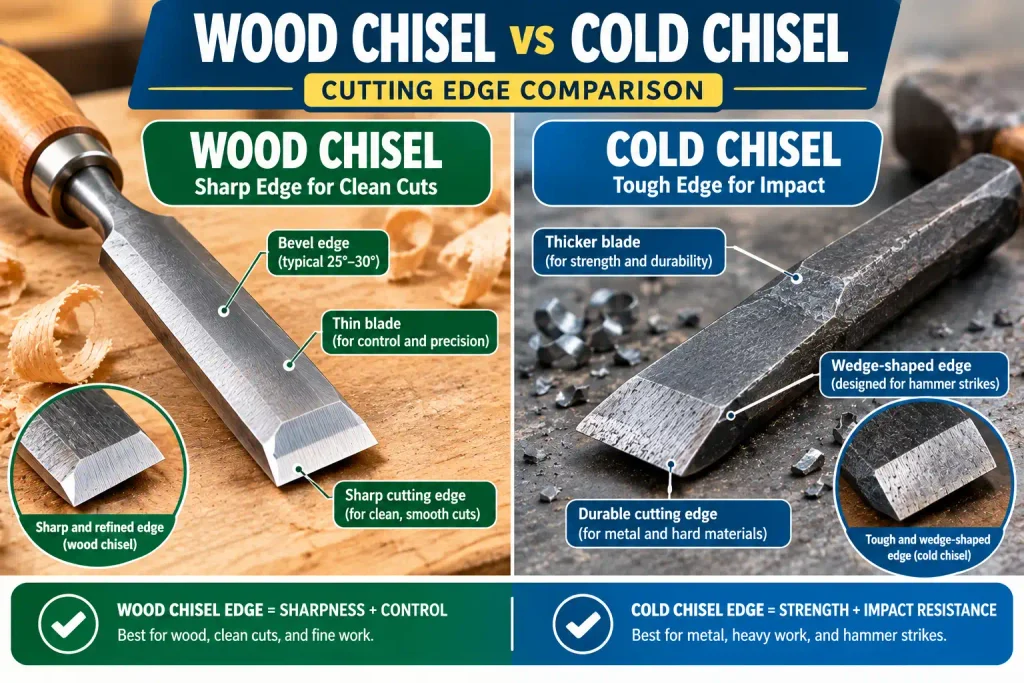
The cutting edge is another major difference between a wood chisel and cold chisel.
A wood chisel generally has a relatively thin, sharp edge. This allows the user to make accurate cuts and remove small amounts of material.
A cold chisel has a more robust cutting edge designed to withstand impact while cutting hard material.
In simple terms:
Wood chisel = sharpness and control
Cold chisel = strength and impact resistance
The exact edge geometry varies between chisel types and manufacturers.
3. Blade Thickness and Strength
Wood chisels are available in different blade thicknesses depending on their intended use.
For example, a thin paring chisel is designed for controlled trimming, while a heavier mortise chisel is built for more demanding work.
Cold chisels generally have a heavier construction because they must tolerate repeated hammer strikes.
This difference is important when choosing a chisel for cutting metal versus one for woodworking.
4. Handle and Striking Design
Not every wood chisel is designed to be struck heavily.
Some woodworking chisels have handles and construction suitable for light hammer or mallet work. Others are intended mainly for hand pressure and controlled paring.
Cold chisels, on the other hand, are specifically intended to be driven by a hammer.
This means you should not assume that every chisel can safely handle the same type of impact.
Important: Always check the manufacturer’s instructions before striking a chisel.
5. Cutting Action
The two tools also work differently.
When using a wood chisel, the goal is often to make a controlled cut through wood fibers.
For example, a carpenter may use a wood chisel to:
- Pare a joint
- Clean a mortise
- Trim a tenon
- Remove waste wood
- Square a corner
A cold chisel is more commonly used with repeated hammer blows to fracture, cut, or remove metal.
The cutting action is therefore more aggressive.
6. Sharpness vs Toughness
A woodworking chisel needs a sharp edge because clean cutting is important.
A sharp wood chisel can remove small amounts of wood with good control.
A cold chisel needs a cutting edge that can withstand impact while working against hard material.
That does not mean a cold chisel should be dull. Rather, its edge geometry and overall construction are designed around durability under impact.
This is one reason you should not treat a woodworking chisel and a metalworking chisel as interchangeable tools.
7. Typical Work Environment
Wood chisels are commonly found in:
- Woodworking shops
- Carpentry workshops
- Furniture-making shops
- Cabinetmaking projects
- DIY workshops
Cold chisels are more common in:
- Metalworking shops
- Automotive repair
- Fabrication work
- Mechanical repair
- General maintenance
Knowing where each tool is normally used makes the choice much easier.
Can You Use a Cold Chisel on Wood?
Technically, a cold chisel can physically cut or damage wood, but it is not the right tool for normal woodworking.
A cold chisel is designed for hard materials and impact work. Its edge geometry and construction are not optimized for making clean, controlled woodworking cuts.
Using one on wood can produce rough results and make precise woodworking more difficult.
For woodworking, use a properly designed wood chisel instead.
Can You Use a Wood Chisel on Metal?
Generally, you should not use a standard wood chisel to cut metal.
Metal is much harder and places different demands on the cutting edge. A wood chisel may become damaged, nicked, or otherwise unsafe when used incorrectly.
If you need to cut or chip metal, use a proper cold chisel or another metalworking tool designed for that application.
Which Chisel Should You Buy?
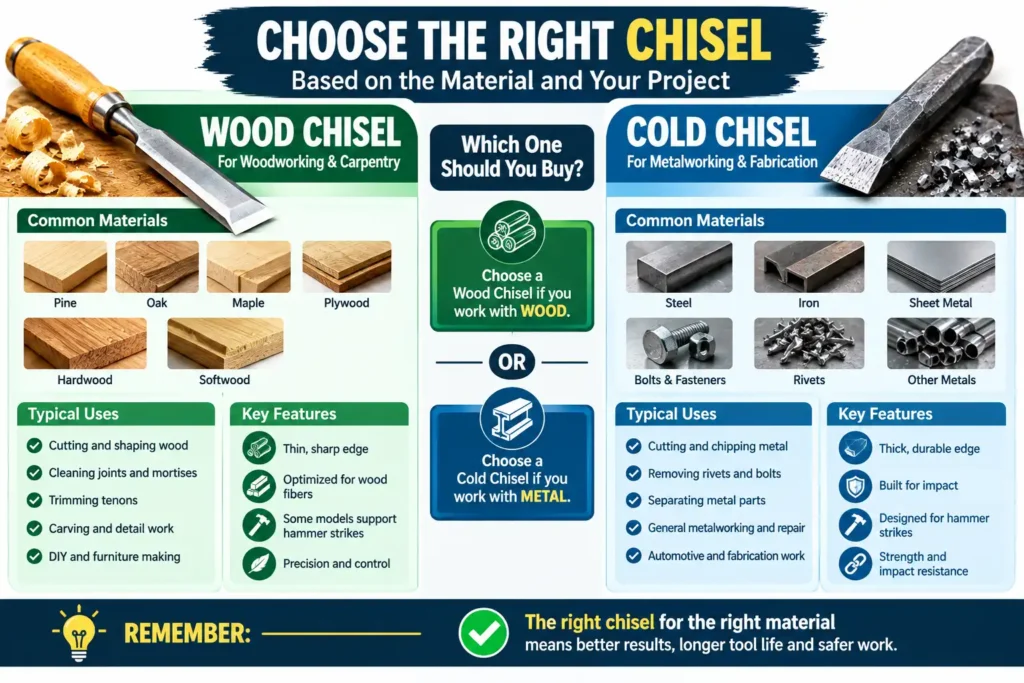
Your choice depends mainly on the material you plan to work with.
Choose a wood chisel if you:
- Build furniture
- Do carpentry
- Work on cabinets
- Cut or trim joints
- Make mortises
- Shape or clean wood
- Do general woodworking
Choose a cold chisel if you:
- Work with metal
- Cut bolts or rivets
- Remove metal parts
- Perform mechanical repairs
- Work on fabrication projects
- Need a tool for impact-based metal cutting
If most of your projects involve wood, start with a good set of woodworking chisels rather than buying a cold chisel.
What About a Chisel for Door Hinges?
Door hinge installation is a common woodworking task that requires controlled removal of wood.
A sharp bevel-edge or suitable bench chisel can be useful for cleaning and squaring a hinge mortise.
If this is the type of work you do, see our dedicated guide to best chisels for door hinges and mortising.
The important point is that a door-hinge chisel is still a woodworking chisel, not a cold chisel.
How to Keep a Wood Chisel Sharp
A sharp wood chisel is easier to control and usually produces cleaner cuts.
Basic maintenance includes:
- Keep the back of the blade flat.
- Maintain the primary bevel.
- Hone the cutting edge regularly.
- Use a micro-bevel when appropriate.
- Remove the burr after honing.
- Store the chisel so the cutting edge does not contact hard surfaces.
For a complete sharpening procedure, follow our guide on how to sharpen a wood chisel.
Wood Chisel vs Cold Chisel Safety
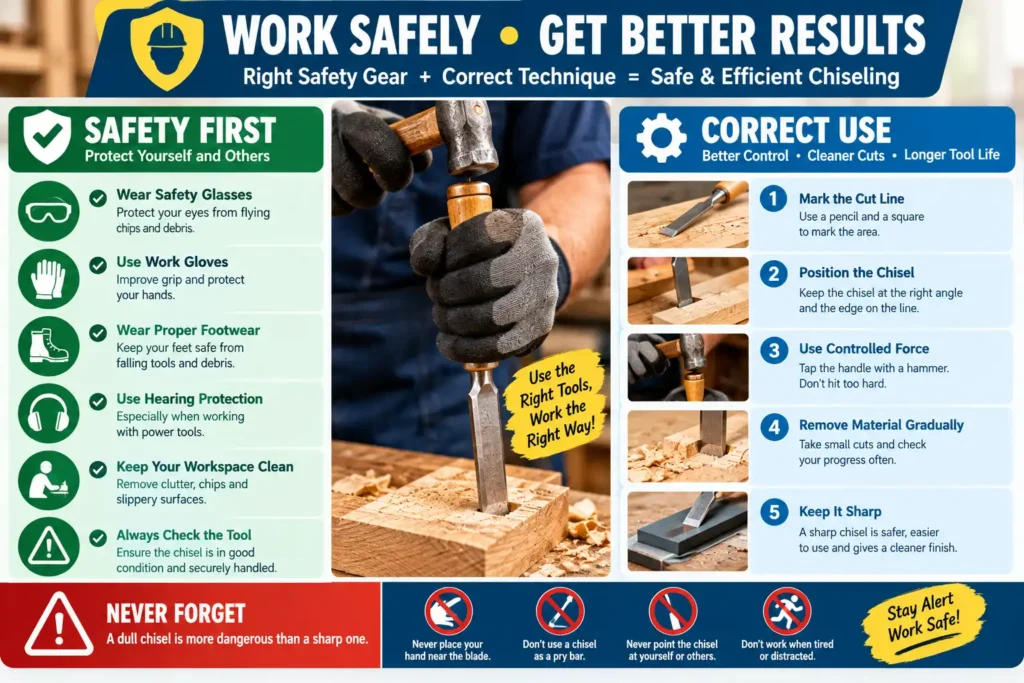
Using the correct chisel is only part of safe tool use.
Wood chisel safety
- Keep the cutting edge sharp.
- Cut away from your body.
- Secure the workpiece.
- Use appropriate eye protection.
- Use a suitable mallet or hammer when the chisel is designed for striking.
- Never place your hand directly in front of the cutting path.
Cold chisel safety
- Wear safety glasses or appropriate eye protection.
- Secure the metal workpiece.
- Use a suitable hammer.
- Inspect the chisel before use.
- Do not use a damaged or mushroomed striking end.
- Keep other people away from flying chips.
Metalworking can produce sharp fragments, so eye protection is especially important.
Wood Chisel vs Cold Chisel: Which Is Better?
Neither tool is universally better.
They are designed for different jobs.
If you work primarily with wood, choose a wood chisel. It provides the edge geometry and control needed for woodworking.
If you work primarily with metal, choose a cold chisel or another suitable metalworking chisel designed for the job.
The most important rule is simple:
Match the chisel to the material and the job.
Using the correct tool improves control, protects the tool, and helps reduce the risk of accidents.
Frequently Asked Questions
What is the main difference between a wood chisel and a cold chisel?
The main difference is their intended material and construction. A wood chisel is designed for cutting and shaping wood, while a cold chisel is designed for cutting and chipping metal.
Can you use a cold chisel for woodworking?
You can physically damage or cut wood with many hard-edged tools, but a cold chisel is not designed for normal woodworking. A wood chisel is the better choice for controlled woodworking cuts.
Can you use a wood chisel to cut metal?
A standard wood chisel should not be used as a metal-cutting chisel. Metal can damage the cutting edge and create an unsafe situation.
Is a cold chisel sharper than a wood chisel?
Not necessarily. A wood chisel is generally optimized for a sharp woodworking edge, while a cold chisel is designed around strength and impact resistance.
Can you hammer a wood chisel?
Some wood chisels are specifically designed for hammer or mallet strikes. Others are intended mainly for hand pressure. Check the manufacturer’s instructions before striking any chisel.
What is the best chisel for woodworking?
For general woodworking, a good set of bevel-edge or bench chisels is a practical starting point. The best choice depends on the type of work, required sizes, handle design, and budget.
Final Thoughts
The wood chisel vs cold chisel comparison becomes simple once you focus on the material and the type of work.
A wood chisel is designed for precision woodworking, while a cold chisel is designed for impact-based metalworking.
Do not choose a chisel simply because it looks similar to another one. Blade geometry, strength, handle design, and intended use all matter.
If you are building a woodworking tool collection, start with the basic wood chisels you will use most often and add specialized chisels as your projects become more demanding.
As an Amazon Associate, we earn from qualifying purchases. This supports the blog at no extra cost to you—thanks for your support!