Chisel maintenance and storage are essential for keeping wood chisels clean, sharp, rust-free, and ready for woodworking. Regular cleaning, proper edge care, and safe storage can help prevent damage and extend the useful life of your tools.
In this guide, you will learn how to clean wood chisels, prevent rust, maintain sharp cutting edges, care for handles, and choose the right storage method.
If you are new to these tools, start with our guide to wood chisels, their types, uses, and how to choose the right one.
Table of Contents
Why Chisel Maintenance Matters
A wood chisel needs more than occasional sharpening. Dust, glue, wood sap, moisture, and contact with other tools can affect its condition.
Regular care helps you:
- Reduce the risk of rust on steel blades.
- Protect the cutting edge from chips and dents.
- Maintain clean, controlled cuts.
- Identify loose handles and other damage early.
- Keep your tools organized and safer to handle.
- Reduce the need for major repairs or edge restoration.
A simple routine after each woodworking session is often enough to prevent many common problems.
1. Clean Your Wood Chisels After Every Use
Cleaning is the first step in proper chisel care. Do not put a dirty or damp chisel straight into a storage box.
Remove dust and wood residue
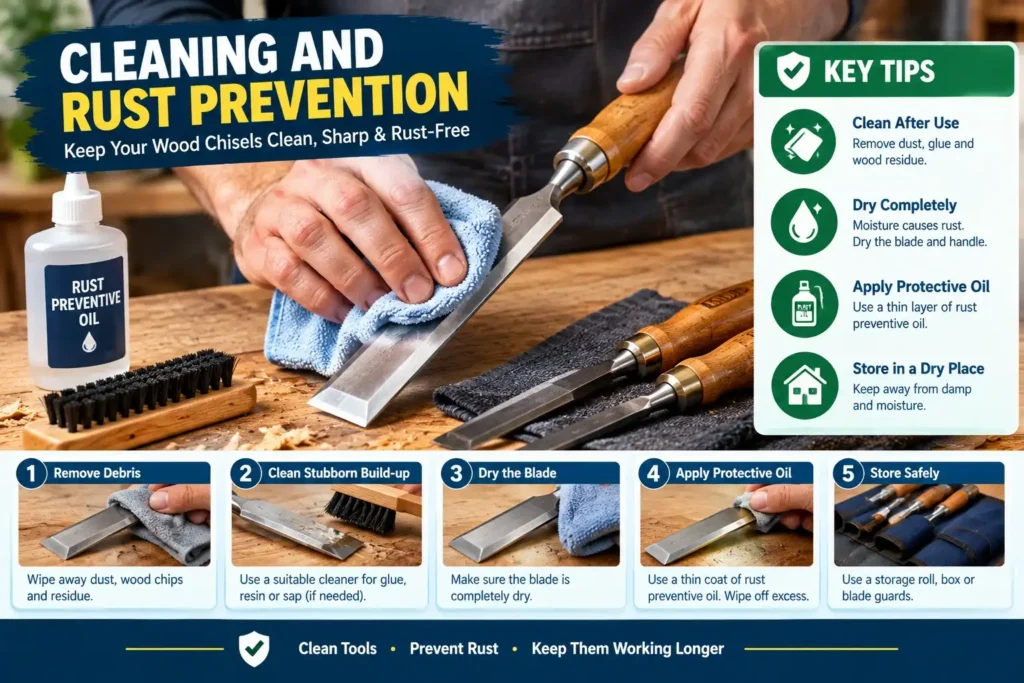
Wipe the blade with a clean, dry cloth after use. Remove sawdust, wood fibers, and other loose debris.
If glue, resin, or sap sticks to the blade, use a suitable cleaner that is safe for the tool’s finish. Follow the cleaner’s instructions, and keep solvents away from flames. Work in a well-ventilated area when using them.
Avoid scraping the blade with another steel tool. This can scratch the surface or damage the cutting edge.
Dry the blade completely
Moisture can cause rust, especially on carbon-steel chisels. After cleaning, dry the entire blade, including the area near the handle or ferrule.
Do not leave a chisel on a wet workbench or in a damp toolbox.
Check the cutting edge
Look at the edge under good light. Check for small chips, dents, rust spots, or signs of uneven wear.
Do not run your finger along the cutting edge to test it. If you find damage, assess whether the chisel needs honing, sharpening, or professional repair before using it again.
2. Prevent Rust on Chisel Blades
Many chisel blades are made from steel that can corrode when exposed to moisture. Rust prevention is especially important in humid workshops or when tools remain unused for long periods.
Apply a thin protective coating
After cleaning and drying the blade, apply a very thin layer of a suitable rust-preventive oil or other product recommended for your tool.
Wipe away excess oil. A thick coating can collect dust and may transfer onto wood during your next project.
Before using the chisel on wood, wipe the blade clean so oil does not stain the workpiece.
Store chisels in a dry place
Keep your chisels away from damp floors, leaking roofs, wet walls, and direct contact with water. A dry drawer, toolbox, or dedicated cabinet is usually a better choice than an exposed shelf in a humid area.
If your workshop is very humid, consider using a suitable cabinet desiccant or another moisture-control method. Follow the product’s instructions and keep it away from children.
For additional guidance on protecting chisel edges and storing your tools safely, read Lee Valley Tools’ guide to chisel care and storage.
Remove light surface rust carefully
If you notice small rust spots, address them before they spread.
- Clean and dry the blade.
- Use a suitable rust-removal product or fine abrasive recommended for tool steel.
- Work gently to avoid changing the blade’s shape.
- Clean away all residue.
- Apply a thin rust-preventive coating.
If rust has caused deep pitting or damage near the cutting edge, the chisel may need more extensive restoration. Do not remove large amounts of steel just to make the blade look shiny.
3. Keep the Cutting Edge Sharp
A clean blade is not necessarily a sharp blade. A chisel can become dull through normal use, even when it has been stored correctly.
Hone the edge regularly
Honing refreshes an edge that has started to lose its sharpness. It usually removes less material than a full sharpening session.
Use a suitable sharpening stone and maintain the bevel geometry recommended for your chisel. A honing guide can help you hold a consistent angle.
Do not wait until the edge becomes badly rounded or damaged. Regular light honing can make edge maintenance easier.
Sharpen when honing is not enough
If the edge is badly dull, chipped, or rounded, honing alone may not restore it efficiently. You may need to reshape the bevel before refining the edge on finer abrasives.
For detailed instructions, follow our guide on how to sharpen a wood chisel in 5 easy steps.
Test the edge safely
Use a controlled cut on a suitable scrap piece of wood. A properly maintained chisel should cut cleanly without requiring excessive force.
Keep both hands behind the cutting edge, secure the workpiece, and direct the tool away from your body. Never test sharpness by touching the edge with your finger.
4. Protect the Chisel Handle
The handle is just as important as the blade. A damaged or loose handle can make the tool harder to control.
Inspect wooden handles
Check wooden handles for:
- Cracks or splits.
- Loose movement around the blade or ferrule.
- Splinters and rough areas.
- A damaged striking end.
- Signs of swelling or shrinkage.
Clean the handle with a suitable cloth. Avoid soaking it in water, as excessive moisture can affect the wood.
If the handle has a rough surface, smooth it carefully without removing more material than necessary.
Condition the wood when needed
Some unfinished wooden handles benefit from an appropriate wood-conditioning oil or finish. Check the manufacturer’s recommendations before applying anything.
Use only a small amount, wipe off excess, and allow the finish to dry fully before storing the chisel.
Do not apply a finish that makes the handle slippery. A secure grip is essential for controlled work.
Repair damaged handles before use
Do not continue using a chisel with a cracked handle or a loose blade connection. Repair or replace damaged parts before returning the tool to service.
For chisels designed to be struck with a mallet, inspect the handle and striking end regularly. Follow the manufacturer’s guidance about suitable mallets and replacement handles.
5. Choose the Right Chisel Storage Method
Good storage keeps the cutting edges apart, protects the handles, and makes it easier to find the size you need.

Chisel storage roll
A storage roll has individual pockets that separate the chisels. It is useful for small workshops and for transporting tools.
Choose a roll that fits your chisels without forcing the blades into tight pockets. Make sure the tools are clean and dry before rolling them up.
Protective blade guards
Blade guards or protective caps cover the cutting edge when the chisel is not in use. They are useful when storing tools in a drawer or carrying them to another location.
Use guards designed to fit your tools securely. A loose guard may fall off, while a poorly fitting guard can damage the edge.
Wooden storage box
A wooden case with separate slots can protect the blades from contact with other tools. It also keeps a set organized by size.
Before closing the box, check that the chisels are dry and that the cutting edges cannot touch one another.
Wall-mounted rack or tool cabinet
A dedicated rack or cabinet makes frequently used chisels easy to reach. Ensure that each tool is supported securely and cannot fall or expose its edge to accidental contact.
Keep the storage area away from damp surfaces and avoid placing chisels where someone might brush against the blades.
Which storage method is best?
| Storage method | Best for | Main point to remember |
| Chisel roll | Transport and compact storage | Dry tools before packing |
| Blade guards | Protecting individual edges | Use a secure, correctly sized guard |
| Wooden case | Keeping a set organized | Separate each cutting edge |
| Wall rack | Frequent workshop use | Mount securely and protect exposed edges |
| Tool cabinet | Larger collections | Keep the interior dry and organized |
The best option is the one that keeps your chisels dry, prevents blade-to-blade contact, and allows you to handle them safely.
6. Common Chisel Maintenance Mistakes to Avoid
Small mistakes can shorten the useful life of a chisel. Avoid these habits:
Putting chisels away while wet
Even a small amount of moisture can lead to rust. Always dry the blade before storage.
Leaving blades loose in a drawer
Chisels can strike other tools and develop chips or dents. Use separate slots, blade guards, or a storage roll.
Using a dull chisel
A dull edge often requires more force and can make cuts less predictable. Hone or sharpen the tool when its performance declines.
Using a chisel as a pry bar
Wood chisels are cutting tools, not general-purpose levers. Prying can chip the edge, bend the blade, or damage the handle.
Striking a chisel with the wrong tool
Use the type of mallet recommended for the chisel. Do not strike a chisel with a steel hammer unless the manufacturer specifically states that it is designed for that use.
Grinding without controlling heat
Excessive heat during grinding can damage the temper of the steel. If grinding is necessary, use a suitable method, avoid overheating the edge, and follow the tool manufacturer’s guidance.
Ignoring cracks and loose parts
A damaged handle or chipped blade can make the tool unsafe. Inspect the chisel and repair or replace damaged parts before use.
7. Chisel Maintenance and Storage: A Simple Routine
You do not need a complicated schedule. Use this routine to keep your tools in good condition.
After every use
- Wipe away dust, glue, and wood residue.
- Dry the blade completely.
- Inspect the cutting edge and handle.
- Apply a thin rust-preventive coating when appropriate.
- Fit the blade guard or return the chisel to its storage slot.
Before each woodworking session
- Check for rust, chips, or a dull edge.
- Make sure the handle and blade connection are secure.
- Confirm that the workpiece can be held safely.
- Hone the edge if cutting performance has declined.
During longer periods of storage
- Clean and dry every chisel.
- Apply suitable rust protection.
- Cover or separate the cutting edges.
- Store the tools in a dry place.
- Inspect them occasionally, especially in humid conditions.
These steps take only a little time but can prevent many avoidable maintenance problems.
Frequently Asked Questions
How often should I clean my wood chisels?
Wipe and inspect your chisels after every use. Clean off glue or sticky residue as needed, and always dry the blade before storing it.
Should I oil my wood chisel after every use?
A thin rust-preventive coating can help protect steel blades, particularly in humid conditions or during long-term storage. Avoid excess oil, and wipe the blade clean before using it on wood.
How do I keep a wood chisel from rusting?
Keep the blade clean and dry, apply a suitable rust-preventive product when needed, and store the chisel in a dry place. Avoid leaving it on damp surfaces or in a wet toolbox.
Can I store wood chisels in a toolbox?
Yes, provided the toolbox is dry and the cutting edges are protected. Use blade guards, individual slots, or a tool roll to prevent the blades from hitting other tools.
How can I tell when a chisel needs sharpening?
If the chisel tears wood, requires excessive force, or no longer makes controlled cuts, inspect the edge. Light honing may restore it; a badly dull or damaged edge may require sharpening.
Is a chisel storage roll better than a wooden case?
Neither is always better. A roll is compact and portable, while a wooden case can provide firm protection and organization. Choose one that fits your tools and keeps the edges separated.
What should I do if my chisel has a chipped edge?
Stop using it for precision work. Small chips may be removed by careful sharpening, but deep chips may require more extensive reshaping. If you are unsure how much steel to remove, seek advice from an experienced tool sharpener.
How should I maintain a wooden chisel handle?
Keep it clean and dry, inspect it for cracks or looseness, and use a suitable wood finish only when needed. Replace or repair a damaged handle before using the chisel again.
Final Thoughts
Good chisel maintenance and storage starts with a few simple habits: clean the blade, remove moisture, protect the cutting edge, inspect the handle, and store each tool safely.
You do not need an expensive cabinet or a complicated maintenance system. A suitable storage roll, protective guards, or a well-organized box can work well when kept dry and used correctly.
Make these steps part of your regular woodworking routine, and your chisels will stay in better condition, remain easier to maintain, and be ready for more accurate work.