A wood chisel is a simple hand tool that helps you remove wood, trim joints, clean corners, and shape details. But getting clean results takes more than a sharp blade. You also need the right grip, controlled pressure, and a safe cutting direction.
If you are learning how to use a wood chisel, start with a small piece of scrap wood. Practice light cuts before moving on to furniture, door frames, or joinery projects.
For a broader introduction to chisel types, sizes, and uses, read our guide to wood chisels, their types, uses, and how to choose the right one.
Table of Contents
What You Need Before You Start
Gather these items before cutting:
- A sharp wood chisel that suits the job
- A stable workbench or work surface
- A bench vise or suitable clamps
- A wooden mallet, if the task requires striking
- A pencil and marking tool
- Safety glasses
- Scrap wood for practice
Choose a chisel with a blade width that matches your task. A narrow chisel is useful for small details, while a wider bench chisel can remove more material from larger surfaces.
If you are choosing your first set, see our guide to the best wood chisels for beginners.
Wood Chisel Safety Rules
Before using a chisel, follow these basic safety rules:
- Secure the wood. Clamp the workpiece so it cannot slide or turn.
- Check the cutting edge. A sharp, undamaged edge gives you better control than a dull one.
- Keep your hands behind the cutting edge. Never place a hand in the blade’s path.
- Cut away from your body. Plan the direction of each cut before applying force.
- Use the right striking tool. Use a suitable wooden or manufacturer-recommended mallet when the chisel is designed for striking.
- Wear safety glasses. Small chips can fly from the workpiece.
- Do not force the blade. If the chisel stops moving, stop and check the grain, cutting angle, and sharpness.
Do not strike a chisel handle with a metal hammer unless the tool is specifically designed for that use.
For more guidance on safe chisel handling, proper grip, and controlled cutting techniques, read Lee Valley Tools’ guide to using a chisel safely.
How to Use a Wood Chisel Step by Step
Step 1: Mark the Cutting Area
Use a pencil or marking knife to identify the area you want to remove. For a straight cut, mark the boundary clearly across the wood.
When making a recess or joint, mark both the outline and the required depth. Clear marks help you avoid removing too much material.
For a clean shoulder or edge, keep the cutting line visible as you work. If the cut must be accurate, make a light scoring cut along the line before removing larger chips.
Step 2: Secure the Wood
Place the wood on a stable workbench and clamp it firmly. The workpiece should not move when you press the chisel against it.
Position the wood so you can see the cutting line and guide the tool without reaching across the blade. Make sure the area below or beyond the workpiece is clear.
Never hold a small piece of wood in one hand while pushing a sharp chisel with the other. Secure it before cutting.
Step 3: Hold the Chisel Correctly
Grip the handle firmly but comfortably. Keep your wrist in a natural position and use your free hand to guide the blade only from a safe position behind the cutting edge.
For light trimming and fine work, guide the chisel with controlled hand pressure. For heavier cuts, use a suitable mallet and keep your strikes measured.
The exact grip depends on the job. The key is to maintain control and avoid placing your fingers in front of the cutting edge.
Step 4: Position the Bevel
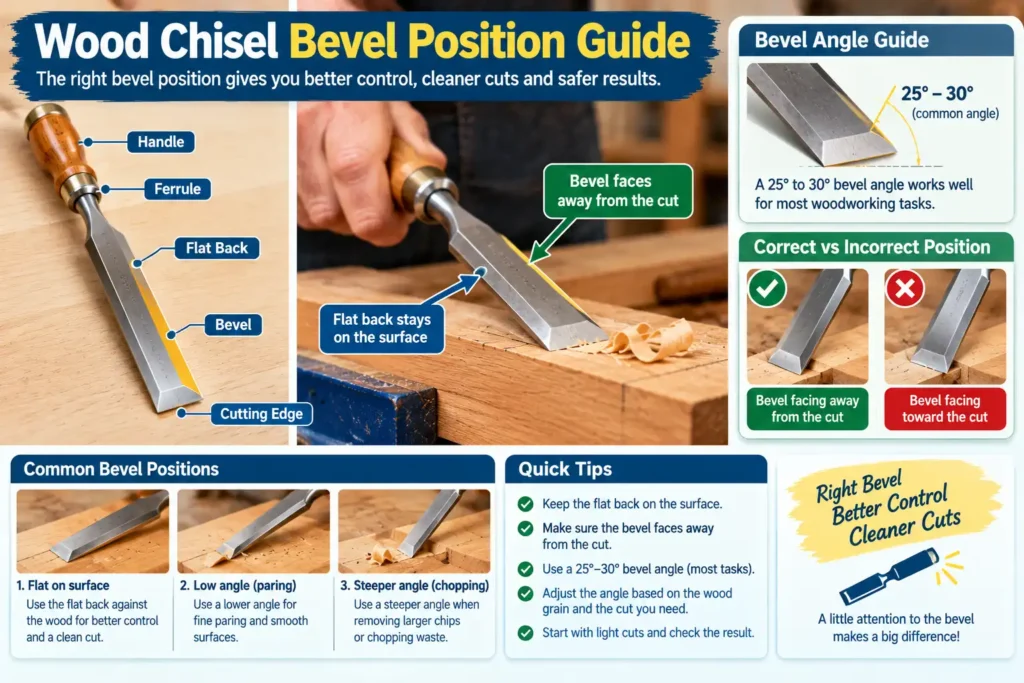
The bevel is the angled surface ground near the cutting edge. Its position affects how the blade moves through the wood.
For many bench-chisel cuts, place the flat back against the surface you want to keep flat. Use the bevel to control the depth and direction of the cut.
When paring a surface, a low cutting angle often gives better control. When removing waste from a recess, you may need a different angle to lift material out.
There is no single bevel position for every task. Start with light cuts and adjust the angle based on the grain and the result you need.
Step 5: Make Small, Controlled Cuts
Start with shallow cuts rather than trying to remove a large amount of wood at once.
- Push the chisel slowly for light paring.
- Use gentle mallet taps for controlled chopping when needed.
- Remove thin chips and check the surface frequently.
- Keep the cutting edge aligned with your marked line.
- Stop if the blade catches or the wood begins to split.
Working in small stages helps prevent tear-out and gives you more control over the final shape.
Step 6: Clean the Cut and Check the Fit
After removing the waste, inspect the surface. Use light paring cuts to remove small high spots or clean the edge.
For a joint, test the fit before removing more wood. If the parts do not fit, identify the exact area causing the problem and remove only a little material at a time.
Avoid forcing a joint together. A careful, gradual approach is more likely to produce a clean fit.
How to Pare Wood With a Chisel?
Paring is a controlled technique for removing thin layers of wood. It is useful when fitting joints, smoothing shoulders, or adjusting a piece that is almost the right size.
- Secure the workpiece.
- Position the sharp edge at the area you want to trim.
- Hold the chisel with both hands where appropriate.
- Apply slow, steady pressure.
- Remove a thin shaving and check the result.
- Repeat until the surface reaches the required shape.
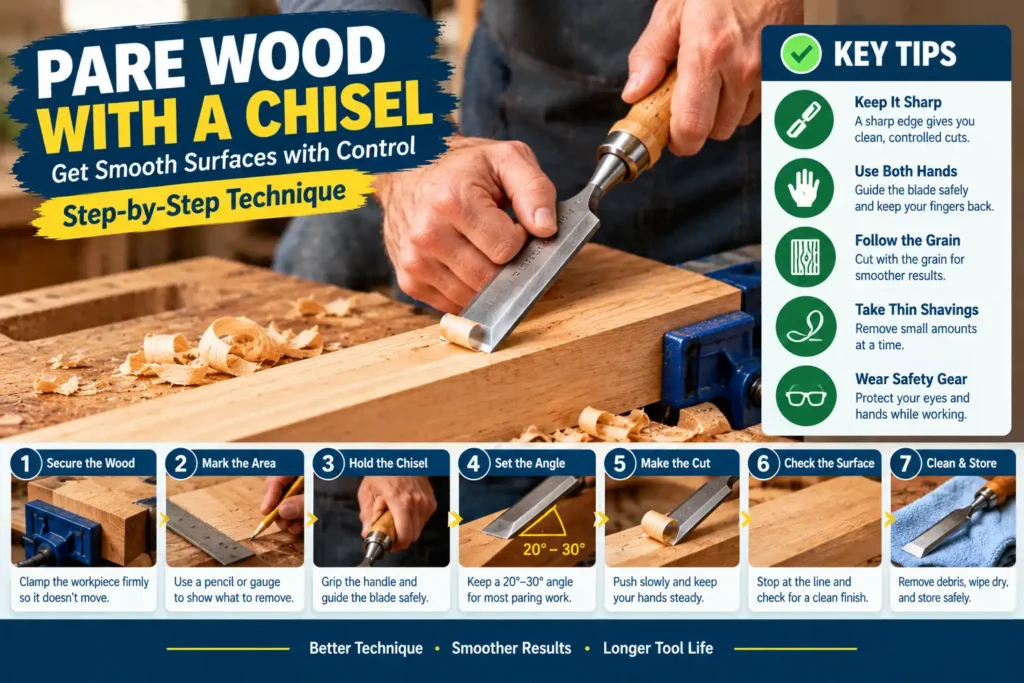
Do not rush the cut. Thin shavings give you more control and make it easier to stop at the correct line.
How to Chop a Recess With a Chisel?
Chopping removes waste wood from a defined area, such as a mortise or hinge recess. It usually involves a series of controlled cuts rather than one deep strike.
- Mark the outline of the recess.
- Make shallow cuts near the boundaries to help define the edges.
- Place the chisel inside the waste area.
- Use suitable mallet taps to remove small sections.
- Clear the waste and check the depth frequently.
- Finish the walls and bottom with light cuts.
Avoid striking too close to a finished edge with excessive force. This can split the wood beyond the marked boundary.
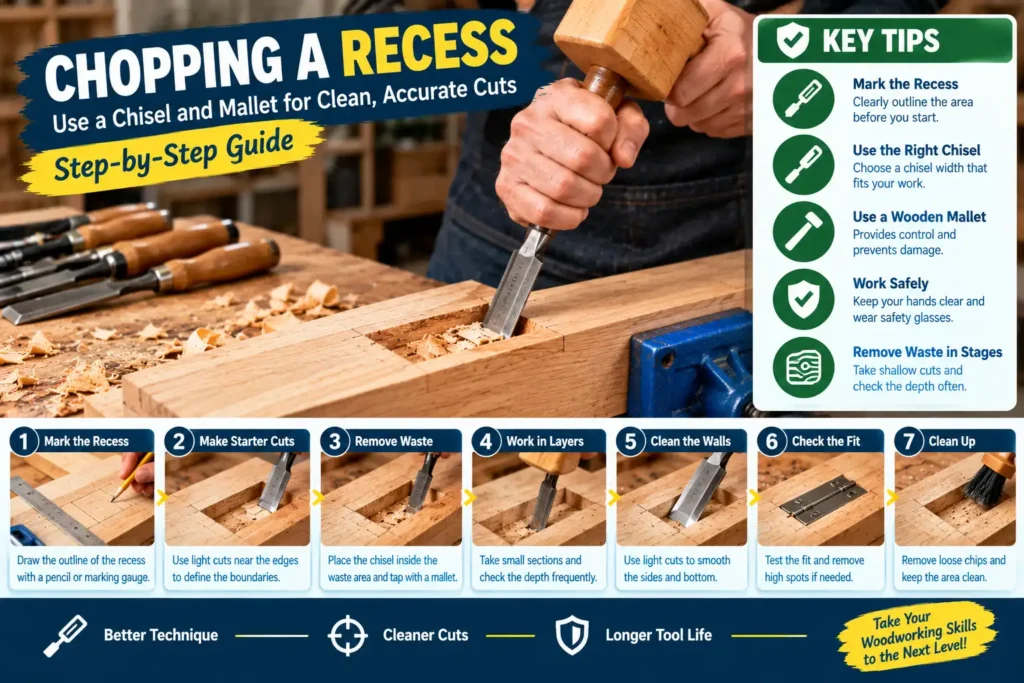
For door hinge recesses and similar tasks, see our guide to the best chisels for door hinges and mortising.
How to Use a Wood Chisel for Common Jobs
Trimming an Edge
Secure the board and identify the high spot. Hold the chisel at a shallow angle and remove thin shavings. Check the edge often to avoid cutting below the desired surface.
Cleaning a Mortise
Remove most of the waste first, then use controlled cuts to clean the walls and ends. Keep the blade aligned with the layout marks and check the depth as you work.
Fitting a Door Hinge
Mark the hinge outline and required recess depth before cutting. Remove the waste gradually, keeping the bottom of the recess flat and the edges close to the marked lines.
For tool options and selection advice, read our guide to chisels for door hinges and mortising.
Smoothing a Joint
Use light paring cuts to remove small high spots. Test the fit frequently and avoid removing material from areas that already fit correctly.
Common Wood Chisel Mistakes to Avoid
Using a dull chisel: A dull edge needs more force and can slip. Keep the edge sharp and in good condition.
Removing too much wood at once: Heavy cuts can split the grain or damage the finished surface. Take smaller cuts and inspect your progress.
Failing to secure the workpiece: Moving wood makes accurate cutting difficult and increases the risk of injury. Use clamps or a vise.
Cutting against the grain without care: Wood fibers may tear ahead of the blade. Change the cutting direction, reduce the depth, or approach the area from another side.
Striking the wrong handle: Some chisel handles are designed for hand pressure, while others can withstand mallet use. Follow the tool manufacturer’s instructions.
Ignoring the cutting line: Check your marks often and stop before you cross the finished edge.
How to Keep Your Wood Chisel Sharp
A sharp chisel cuts more cleanly and is easier to control. Inspect the edge regularly, and sharpen it when it becomes dull, chipped, or difficult to guide.
For detailed instructions, follow our guide on how to sharpen a wood chisel in 5 easy steps.
After use, wipe away dust, glue, and moisture. Protect the blade from rust and store the chisel so its cutting edge cannot strike other tools.
Our guide to chisel maintenance and storage explains how to protect the blade and handle between projects.
Frequently Asked Questions
Q: Can a beginner use a wood chisel?
Answer: Yes. Beginners can start with simple trimming and shallow paring cuts on scrap wood. Use a sharp chisel, secure the workpiece, and practice before attempting detailed joints.
Q: Should I push a wood chisel or use a mallet?
Answer: Use hand pressure for light paring and fine trimming. Use a suitable mallet for controlled chopping when the chisel is designed for striking. Do not force the blade.
Q: Which way should the bevel face?
Answer: It depends on the cut. The flat back can help guide the blade along a flat surface, while the bevel helps control depth and direction. Practice with light cuts to see how the tool behaves.
Q: Why does my wood chisel tear the wood?
Answer: Tear-out can happen when you cut against the grain, remove too much material, or use a dull edge. Try shallower cuts, change direction, and check the blade’s sharpness.
Q: How often should I sharpen a wood chisel?
Answer: Sharpen it when the edge no longer cuts cleanly or requires excessive force. The frequency depends on the wood, the task, and how often you use the tool.
Q: Can I use a wood chisel on metal?
Answer: No. A wood chisel is designed for wood, not for cutting metal. Use a suitable metalworking chisel for metal tasks.
Final Thoughts
Learning how to use a wood chisel takes practice, patience, and good technique. Start with clear layout marks, secure the workpiece, use the right cutting angle, and remove small amounts of wood at a time.
With a sharp edge and controlled movements, you can trim edges, clean joints, shape recesses, and produce more accurate woodworking results. Always put safety first and maintain your tools after each project.