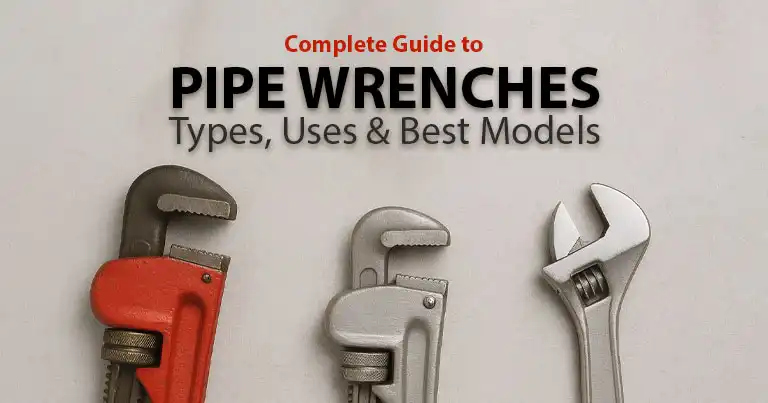
This post contains affiliate links. As an Amazon Associate, we earn from qualifying purchases at no extra cost to you.Did you know that a pipe wrench is an essential tool when it comes to plumbing, gas line installation, or heavy-duty mechanical work? It’s designed to tighten and loosen threaded pipes and fittings.
Whether you’re a professional plumber or a DIY homeowner, the right pipe wrench can make tough jobs faster and safer.
These wrenches are now some of the most trusted tools in both residential and industrial settings. There are variety of designs, from classic cast-iron models to lightweight aluminum ones. Manufacturers are also constantly improving their products to provide more durability, better grip, and ease of use.
In this comprehensive guide, we’ll discuss the different types of pipe wrenches. We’ll also explore how to choose the right size, use them correctly, the best models of the year, and tips for keeping your wrench in top shape.
Table of Contents
What is a pipe wrench?
A pipe wrench is a heavy-duty adjustable wrench designed to grip and turn threaded pipes and fittings. Unlike a regular wrench, it has serrated jaws and a self-tightening mechanism that holds tighter as you apply more torque.
They are typically made of forged steel or aluminum. This makes them strong enough to handle tough plumbing or mechanical work. They come in sizes from 10-inch to 48-inch, depending on the job at hand.
Common uses:
- Tightening or loosening threaded pipes
- Plumbing repair and installation
- Gas line work
- Water heater installation
- HVAC and industrial piping
- DIY home maintenance projects
Specifically designed for round pipe surfaces, making it a must-have in plumbing.
Key components:
- Handle: Provides leverage to rotate the wrench
- Hook jaw: Upper jaw that holds the pipe
- Ankle jaw: Fixed lower jaw
- Adjusting nut: Allows the user to change the size of the jaw opening
- Teeth: Serrated edges for a strong grip
This simple yet powerful tool has remained virtually unchanged in design for decades – because it works.
Types of Pipe Wrenches
It’s may look similar at first glance, but not all serve the same purpose. Different types of wrenches are designed to handle different angles, spaces, and torque levels. Choosing the right type of wrench can make a difficult plumbing job much easier. As a result, it helps you work more safely and efficiently.
Here are the main types you should know:
1. Straight Pipe Wrench
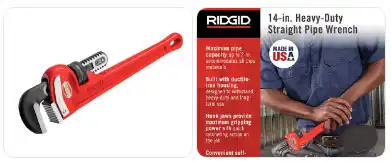
This is the most common and traditional type of pipe wrench. It features a straight handle and adjustable jaws, making it suitable for most standard plumbing work.
✅ Best For:
- General plumbing
- Residential and commercial pipe installation
- Water and gas line work
📝 Features:
- Strong cast iron or aluminum body
- Serrated jaws for a secure grip
- Works best on horizontal and vertical pipes
📌 Tip: A 14-inch or 18-inch straight wrench is perfect for most home plumbing jobs.
2. Offset Pipe Wrench
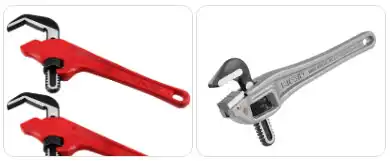
An offset pipe wrench is designed with an angled jaw, allowing it to work in tight spaces or awkward positions that a straight wrench cannot reach.
✅ Best For:
- Tight or hard-to-reach spaces
- Under sinks and behind pipes
- Professional plumbing and HVAC work
📝 Features:
- Jaw offset angle typically between 45–90 degrees
- Ideal for overhead or below-floor piping
- Provides better leverage in limited spaces
Tip: They are especially useful when dealing with old, rusted pipes.
3. Aluminum Pipe Wrench
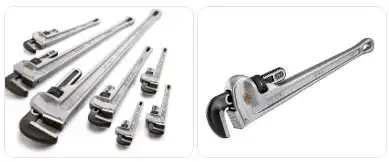
This type is almost identical to the straight pipe wrench, except the body is made of lightweight aluminum. It offers the same strength but is much easier to carry and use for extended periods.
✅ Best For:
- Professionals who use wrenches daily
- Overhead or repetitive work
- DIYers who prefer lightweight tools
📝 Features:
- Up to 40% lighter than steel
- Corrosion-resistant
- Same torque capacity as cast iron
Tip: Ideal for plumbers who work on large projects or at heights.
4. Chain Pipe Wrench
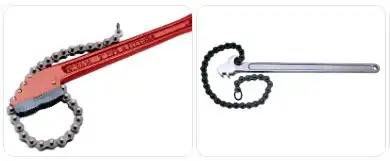
A chain pipe wrench replaces the traditional jaws with a chain loop that wraps around the pipe. It’s perfect for gripping pipes of irregular shapes or very large diameters.
✅ Best For:
- Large or irregularly shaped pipes
- Oil, gas, and industrial work
- Rusted or corroded fittings
📝 Features:
- No fixed jaw — uses chain grip instead
- Works in tight spaces and around corners
- Provides a secure, non-slip hold
Tip: Chain wrenches are often used in combination with other heavy-duty tools.
5. Strap Pipe Wrench
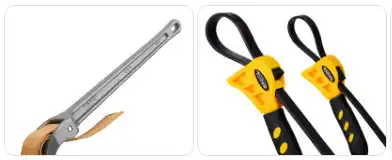
A strap wrench uses a rubber or nylon strap instead of teeth. It’s designed for gripping polished, plastic, or delicate surfaces without damaging them.
✅ Best For:
- PVC pipes and polished fittings
- Chrome or decorative plumbing
- Soft or fragile surfaces
📝 Features:
- Non-marring design prevents scratches
- Adjustable strap for various diameters
- Lightweight and easy to use
Tip: Keep one strap wrench in your toolkit if you often work with plastic plumbing.
6. Compound Lever Pipe Wrench
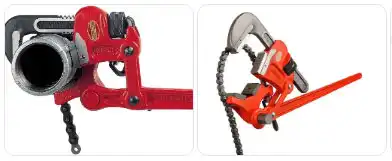
This heavy-duty wrench features a compound leverage mechanism that multiplies torque, making it easier to loosen stubborn fittings with less effort.
✅ Best For:
- Industrial plumbing and gas lines
- Heavy-duty mechanical work
- Rusted or stuck fittings
📝 Features:
- High torque with minimal effort
- Strong steel construction
- Ideal for professionals
Tip: This is not typically a beginner’s tool — it’s made for tough, professional-grade jobs.
Choosing the Right Type:
| Wrench Type | Best Use Case | Weight | Ideal For |
|---|---|---|---|
| Straight | General plumbing | Heavy | DIY + Pros |
| Offset | Tight spaces | Heavy | Professionals |
| Aluminum | Lightweight work | Light | DIY + Pros |
| Chain | Large/irregular pipes | Heavy | Industrial |
| Strap | Delicate surfaces | Light | DIY + Light plumbing |
| Compound | High torque jobs | Heavy | Professionals / Industrial use |
Pipe Wrench Sizes & How to Choose the Right One
There are various sizes ranging from 6 inches to 60 inches. The size refers to the overall length of the wrench, not the jaw opening. The larger the wrench, the more torque it can provide — but it’s also heavier and harder to handle in tight spaces.
Common Sizes and Their Uses
| Wrench Size | Typical Pipe Diameter | Common Use Case | Best For |
|---|---|---|---|
| 6–10 inch | ½ inch – 1 inch | Light-duty work, small home projects | DIY homeowners |
| 12–14 inch | 1 inch – 1½ inch | Household plumbing, general use | DIY + Professionals |
| 18 inch | 1½ inch – 2 inch | Residential & light commercial plumbing | Professionals |
| 24 inch | 2 inch – 3 inch | Heavy-duty plumbing | Pros / Industrial |
| 36 inch+ | 3 inch – 5+ inch | Industrial, oil & gas pipelines | Professionals / Industrial use |
Pro Tips for Choosing Pipe Wrench Size:
- Choose a wrench at least 2 inches longer than the diameter of the pipe.
- For most home plumbing tasks, a 14-inch or 18-inch straight wrench is sufficient.
- Professionals should keep multiple sizes for different pipe diameters.
- If you’re working overhead, consider an aluminum wrench to reduce fatigue.
Remember: Bigger isn’t always better. The right size gives you maximum torque with minimum effort.
Pipe Wrench vs Adjustable Wrench — What’s the Difference?
It’s easy to confuse a pipe wrench with an adjustable wrench, but they are designed for different purposes.
| Feature | Pipe Wrench | Adjustable Wrench |
|---|---|---|
| Grip Type | Serrated teeth bite into pipe | Smooth jaws grip flat surfaces |
| Best For | Round threaded pipes | Nuts, bolts, and fittings |
| Material Handling | Works best on metal pipes | Works on various flat surfaces |
| Torque | High torque for stubborn joints | Lower torque |
| Surface Protection | Can damage polished pipes | Safe on flat surfaces |
Bottom line: Using these type of wrench for gripping and turning pipes, and use an adjustable wrench for nuts and bolts.
How to Use a Pipe Wrench Properly?
Using a pipe wrench correctly ensures maximum grip and minimum damage. Follow these steps:
Step 1: Choose the Right Wrench
Pick the appropriate size based on the pipe diameter. Make sure the wrench is in good condition with sharp teeth.
Step 2: Adjust the Jaw
Open the jaws wide enough to fit the pipe, then close it slightly so the top jaw makes firm contact.
Step 3: Position the Wrench
Place the wrench so that the top jaw faces the direction of rotation. This ensures the teeth bite into the pipe as you apply force.
Step 4: Apply Force
Pull the wrench handle toward you, not away. This gives you more control and power.
Step 5: Loosen or Tighten
Use steady, firm pressure to turn the pipe. For larger pipes, use two wrenches—one for holding and one for turning.
Step 6: Release Carefully
Once the joint is loosened or tightened, release the jaw and remove the wrench carefully.
When to Use Which?
Use a pipe wrench when working on threaded steel or iron pipes — where a strong bite and high torque are required.
Use an adjustable wrench when dealing with nuts, bolts, or fittings with flat surfaces.
Pro Tip: For plumbing jobs, many pros keep both in their toolbox — using the adjustable wrench to stabilize fittings while turning the pipe with the pipe wrench.
Maintenance and Safety Tips
Proper care extends the life of your pipe wrench and keeps you safe during use.
- Clean after every use to remove grease and debris.
- Oil the adjustment nut regularly for smooth operation.
- Inspect the teeth for wear. Replace worn jaws to maintain grip.
- Don’t use a damaged wrench on pressurized systems.
- Use the right size—don’t force a small wrench on a large pipe.
- Wear gloves and eye protection during heavy-duty work.
Final Buying Tips
- Start with one high-quality 14-inch straight pipe wrench if you’re new.
- Keep a strap wrench for delicate pipes and finishes.
- Professionals should have multiple sizes and types for different jobs.
- Invest in well-known brands like RIDGID or KNIPEX for long-term durability.
- Always prioritize safety and proper usage to avoid injuries or pipe damage.
Related Tools & Articles
- 6 Best Pipe Wrenches Under $30 | Top Budget Picks for 2025
- Pipe Wrench vs Adjustable Wrench: Key Difference & Uses 2025
- Best Pipe Wrench for Tight Space — Top Compact Picks (2025)
- Best Pipe Wrench for Plumbing | Top 5 Picks & Buying Guide
- Best Pipe Wrenches for DIY and Professionals — Top 7 Picks
Conclusion
A pipe wrench is more than just another tool — it’s a core piece of equipment for plumbing and mechanical work. Whether you’re tightening a small home pipe or handling a large industrial fitting, the right pipe wrench can make the job safer, faster, and more efficient.
By understanding the different types, sizes, and best brands, you can make a smart buying decision that suits your specific needs. And with proper care, a good pipe wrench will last a lifetime.
Start with a reliable model like RIDGID or KNIPEX, and build your toolkit over time as your projects grow.
FAQs: About Pipe Wrenches
Q1: What is a pipe wrench?
Answer: A pipe wrench is a tool used to grip and turn pipes.
Q2: What does a pipe wrench look like?
Answer: It has a long handle and a jaw with sharp teeth.
Q3: What size pipe wrench should I buy first?
Answer: A 14-inch straight pipe wrench is perfect for most household plumbing tasks.
Q4. Can I use a pipe wrench on plastic pipes?
Answer: No. The teeth can damage plastic. Use a strap wrench for PVC or delicate surfaces.
Q5. How often should I replace the jaws on my pipe wrench?
Answer: Replace when teeth become dull or rounded. Regular inspection prevents slipping accidents.
Q6. What’s better—steel or aluminum pipe wrench?
Answer: Aluminum is lighter and easier to handle. Steel is more durable for industrial work. Many pros keep both.
Q7. Can a pipe wrench be used as a hammer?
Answer: No. Pipe wrenches are not designed for striking. Misuse can damage the tool or cause injury.
Q8: What does a pipe wrench do?
Answer: It tightens or loosens metal pipes.